Splatoon Raiders
I’ll bury the lead here to write about my second wind with Splatoon Raiders. I had played a majority of the game, approaching level 40 (max level 50) and was starting to get burnt out of what felt like a funnel into a slow-paced grind of replaying missions to level up enough to take on the next raid of progress. The game had been heavily pitched as a one-player game and I had played it as such. I pegged it early as a Destiny-lite, and wasn’t crazy about the feelings that brought up. Was time for a break.
After a period of time, I had remembered that I hadn’t quite participated in a part of the game and was curious if it would reignite my interest. That part of the game multiplayer part of the game – the option to ‘Go Help.’ Of course I had asked for help on raids I couldn’t get through on my own, then to be punished with a 30-minute wait until I could ask for help again (though, I get why now, and more on that later). But the structure and layout of the game, in my opinion, is not the single-player campaign I think people like myself may have expected from the sales pitch. Rather, I feel like this is a multiplayer game that players can play solo. I had a lot more fun in my second half of gameplay often sprinkling in my ‘going to help’ others. I feel like the levels, structure of enemy attacks, and balance of attacks really sing when you are playing with two other people. It’s called Splatoon Raiders after all, not “The Splatoon Raider.”
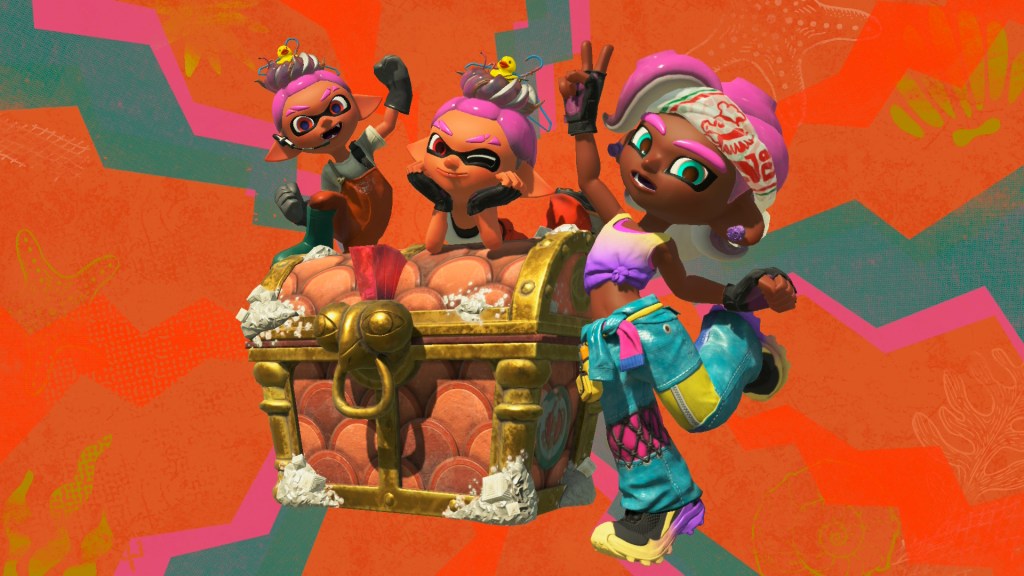
I’d heard a lot of folks griping about Nintendo’s lack of online connectability in Splatoon Raiders, and personally, I am not sure why. I thought connecting to other players was quick and seamless. I loved that I didn’t have to audibly communicate with them, and we would just jump into a random mission another player needed help with that I had already completed. Whether or not some of those players were bots may have some truth to it but it never ruined my experience. It felt like jumping into a quick Destiny strike, and with the combined power of 3 folks at max tank levels, a majority of the time we were able to rip through enemies no problem.
Playing raids multiplayer took the stress off of slow-grinding my level or going back to levels and replaying them alone. I feel like I found quicker success completing raids with others as more eggs could be obtained? And I found myself more willing to try out and level up my other two tanks. The first tank I had maxed out was the Speed Tank, and the Power Tank was the last. Having rolled credits, I can say that all the tanks feel fun and fairly balanced, and it’s cool to choose which tank fits your play-mood each session. Though, over time I’d come to find the ‘Splatellites’ in the Power Tank to be invaluable. I hadn’t realized how much not having an area to swim in created stress on your play, and the Splatellites nearly guarantee a place to duck down and heal every 15 seconds (dependent on your gadgets equipped). Felt like the Garlic upgrade in Vampire Survivors where you could feel border-line invincible. Most of the time, the Power Tank became my go-to in situations where I was taking on my next progressable raid. Now, in the end game, I can see myself embracing the fun of the Tactical Tank turrets or the Speed Tank’s grappling hook when appropriate.
Speaking of having fun… with these types of games that throw all sorts of loot at you in many varieties, I can fall into the mental trap of ‘what’s MY playstyle?’ And sure, I of course have preferences, but I think another factor in my early burnout of the game was that I didn’t let myself play, experiment, and have fun with the variety of weapons and tank gadgets the game offers. Sure, ultimately, the giant paint roller wasn’t for me but using it created a memorable play session. If I get burnt out when everything feels the same and repetitive, then I need to allow myself to put variety into play using the variety the game gives me. Mixing it up keeps a game like Splatoon Raiders fresh, because the goal of simply going to a place and splatting a bunch of salmonids does not change – they just get bigger and more frequent. I was ultimately kindof thankful too that the game will not let you upgrade certain tanks fully until you have upgraded parts and used the other two tanks – therefore forcing you to embrace variety and see all of what the game has to offer in regards to playstyle and attacks.
Not only did I place more variety into my second wind of play, I also placed more care into gadget tinkering. Early on, I didn’t care too much to read what the effects of various gadgets power-ups would be and was hoping my choices could just be more automatic and passive. That may be a result of years of Destiny and games of similar structure that are constantly throwing you more upgrades that promise incremental differences and you start to question if you can really feel a difference. Though, when I’d taken the time to tinker with each of my gadgets in Splatoon Raiders, I feel like that really does let you fine-tune your playstyle to your preferences. The tinkering is the area where you can look at your (eventually 3) equipped gadgets and tell them what you want them to do for you. You can exaggerate certain qualities and leave other ones off. For instance, I didn’t care too much about vertical damage of my Splatellites but I did care about their overall damage and overall paint coverage. You get to numerically weigh what perks of your gadgets are important to you and a majority of the time, I think you can actually feel a difference in the gameplay.
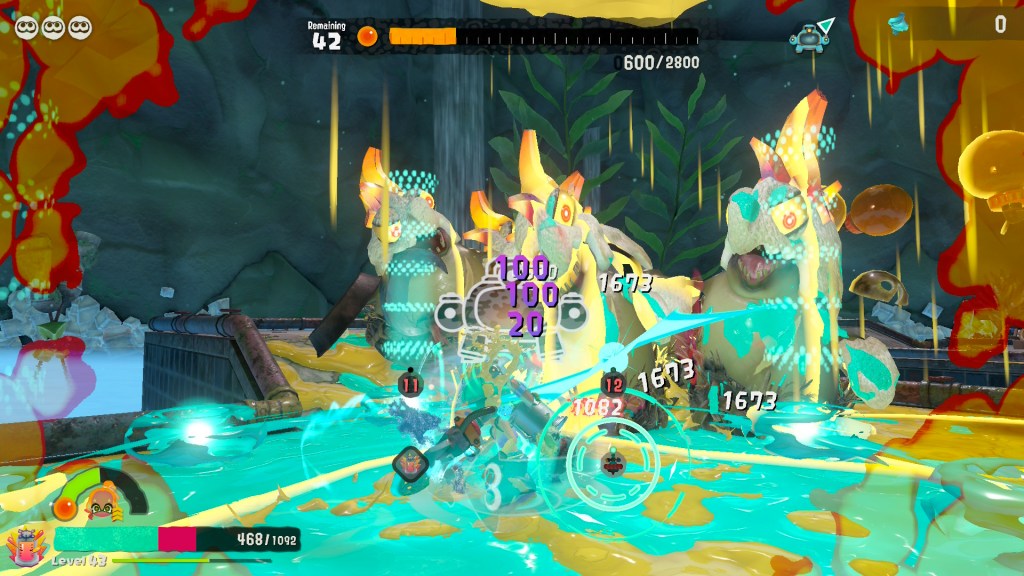
Lastly, I just want to express gratitude and amazement of how good the Switch 2 is. I had a moment during a raid where I reminded myself how crazy it is that so many things can be on the screen at such high-fidelity. I think they use games like Splatoon Raiders and Donkey Kong Bananza to show off this very fact that the Switch 2 can handle a lot of motion, a lot on the screen, and maintain smooth gameplay and fidelity. I continue to applaud it and thankful I was able to pick one up. That sounds like a brag, but also note I empathize with those in which it may not have been a possibility yet, and that our world is making it more difficult with resulting price hikes…
Blood Dungeon
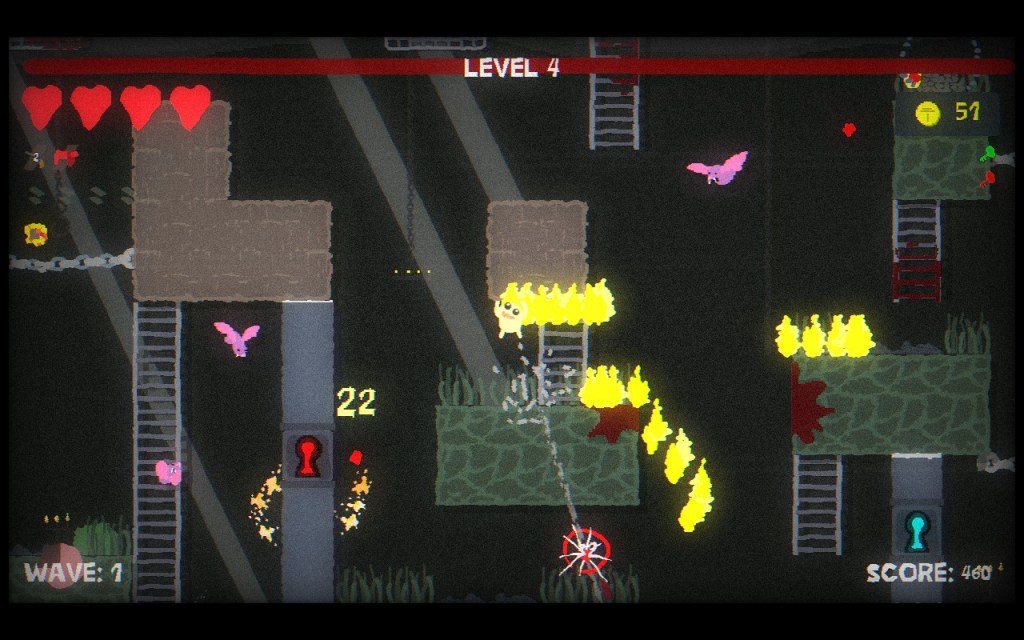
Woah. What a hot and fast yes this game was. Blood Dungeon was not at all on my radar but I caught a couple headlines praising its bullet-heaven goodness and at the $8 price point and after maybe 20 seconds the demo, I jumped right in.
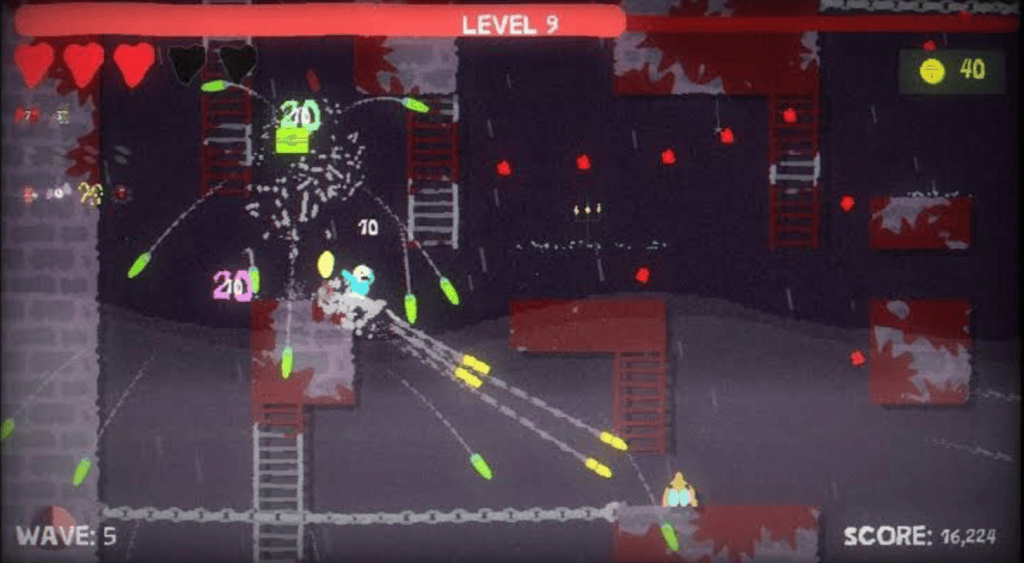
Blood Dungeon blends together an auto-shooter with a 2D-platformer and to my knowledge, nobody’s done that before? I played a bit of Megabonk which mixes auto-shooter into a 3D space… regardless, feels like a fresh take on the auto-shooter genre.
And I think it is. It melds together a lot of languages we understand already a presents them to us in a game that can move as fast as we think. If you’re not savvy with auto-shooters or 2D platformers, I don’t think it’d be impossible for you to play, but Blood Dungeon very quickly assumes you’re here because you’ve played these types of games before and you know what you’re doing.
I noted that I enjoy the art style. Has a very hand-drawn, early YouTube animation vibe to it. Raw, but not sloppy. It still has intention.
The game has a pre-title screen epilepsy warning which lets you know a game can be visually intense, and I quickly found the upgrade menu to be visually invasive. The backlit menu flashes bright with lights and patterns and had that ugly-addiction feeling of something that wanted to manipulate my attention. Thankfully, there’s an option to dim the upgrade menu background and I changed it quick. Much better. Gameplay can still have some visual intensity with movement and number of enemies but nothing that feels like it’s hurting my eyes/brain more than other games I currently play. The characters feature some pretty blatant nudity, admittedly comical at times, but a feature that can also be turned off in the menues if you prefer.
With the early perception of 2D platforming in the game, I think I was naturally curious of why? I started asking the question, ‘Where am I going? And what do I need to retrieve?’ But I think Blood Dungeon‘s goal is less to create a journey within the 2D platforming and more so just use it as the setting for the auto-shooter. And in that context, it works really well. It’s nice to have more to do that just walk around in order to avoid. You can jump, you automatically latch onto walls and ceilings without any sort of climb meter. You can move around snappily to where you need to go in order to dodge enemies, find enemies, and collect blood. The loop of those 3 actions is the real motive of progression. That loop, plus weapon and charm progression, feels great every session.
In auto-shooters, you’re always teetering offense and defense. Offense if the map is fairly empty and you know that time is progression and if you’re not elminating, you’re not collecting currency and you’re not getting stronger and therefore you’re on the hunt. But then your session hits that level when it starts to become overwhelming and it’s then your turn to dodge. And ultimately, your progression each time, mixed with your platforming skill, determines where that line between offense and defense is. And what’s understandably pre-programmed is that the line gets deeper into the game as you unlock new permanent upgrades and new weapons to help you survive longer.
It might be the speed, quick structure, and variety that will keep me playing for multiple rounds. Blood Dungeon sessions are not the long-haul half hour that Vampire Survivors requests (but maybe they will be eventually!?). I feel like my plays land anywhere from 10-15 minutes which feels perfect. The variety of characters, the way they traverse, and the different weapons they use keep playthroughs fresh and exciting. Not only that, but each of the levels offer different methods of traversal that keep the way you move around fresh and exciting too. The structure is really sound and it feels like I’m progressing fast. My play time reads 4 hours, and that felt lengthy for how much fast fun I’ve been having. It feels like the game respects your time.
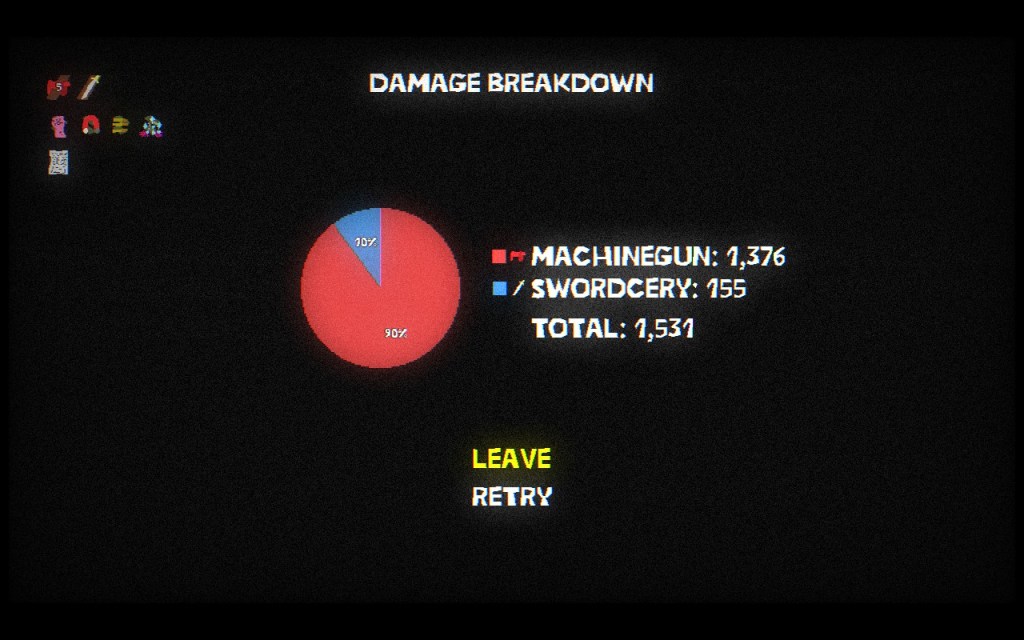
Another sort of quality of life upgrade found within the structure of Blood Dungeon is the after-session damage pie chart. Opposed to a giant list of numbers, percentages, damage outputs and enemies defeated, they give you a quickly legible pie chart that shows the amount of damage percentage each of your weapons had. It’s great to read, as I may have felt one weapon was doing me a ton of good, but it turns out the other was carrying the team.
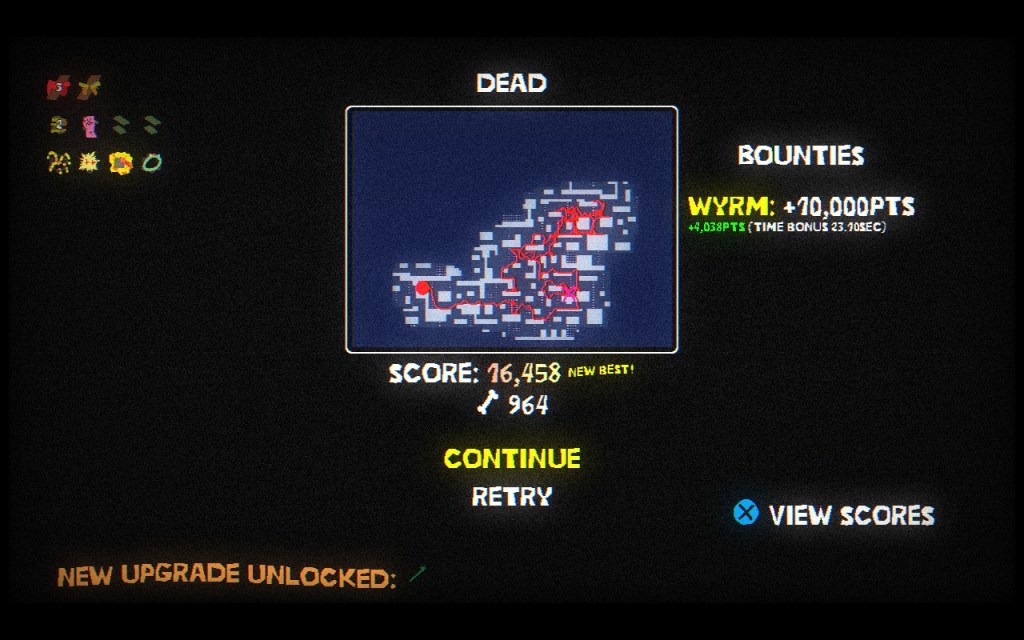
Another fun post-session communication is a map of your total traversal. It appears like a time-lapse using a dot on a map to show where your character traveled. Seeing that I may have missed out on certain areas of the map creates curiosity for next time. It doesn’t seem like there are any particular secrets hidden within the levels but I hope that’s wrong – I’d love a motive and a reward for looking in every corner of the game’s maps.
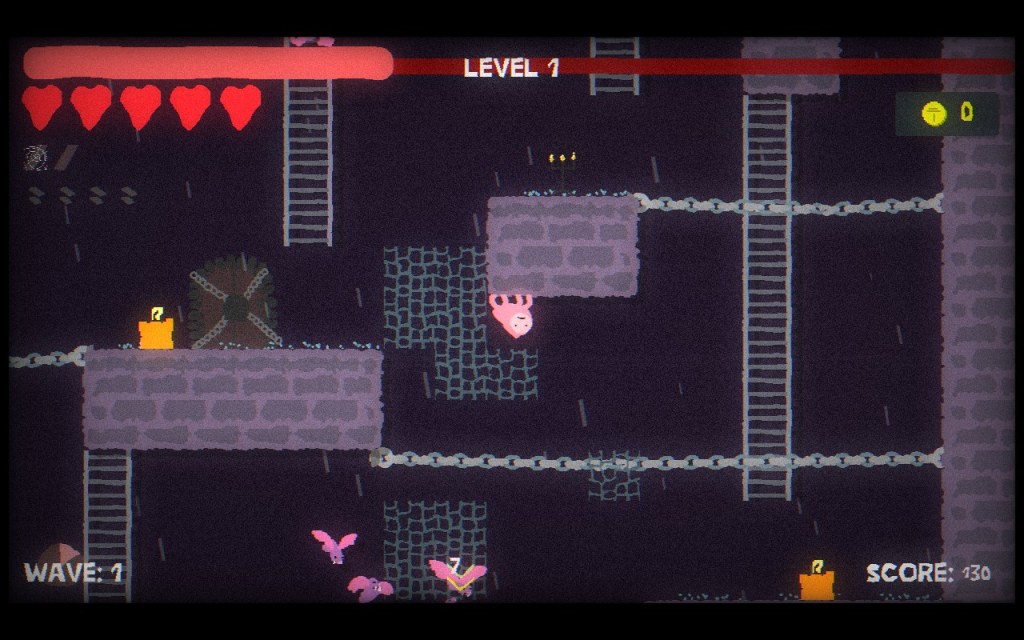
The areas feel fairly big and open enough to keep movement flowing. Movement doesn’t feel too hindered by level design. And the different levels have different sort of gimmicks or structures to them. The first level is a traditional 2D-platforming rectangle map. But then the Pit level is a very vertical/thin column. Another is very horizontal and lacks a lot of space to move up and down. The Flood level teaches me that I don’t need to be that afraid of water in the other levels. Variety is a key factor that keeps my interest in playing alive and lacks redundancy.
I mentioned fast-progression before and that feeling may also be a result of the fact that Blood Dungeon doesn’t gatekeep the fun stuff. You very quickly obtain access to weapons/perks/charms that redefine how you’re playing. I loved discovering what the early choice of Fireworks does – enemies explode into small bullets that hurt other enemies when defeated. The Magnum features a hilariously large bullet that shoots out toward the nearest enemy. The Laser changes it up and holds damage for a moment. It also becomes an ideal canditate in a level in which you have to break open blocks to get to the next area.
While I’ve had fun playing as all the characters and playstyles for a variety of reasons, I found Leggy to be interesting and of note. They traverse more like a bug or spider using all four of their legs, and the weapon they start with are called Webs. Like spider webs, they shoot out and plop onto the map where an enemy is in the format of a decent-sized square. Not only do the webs slow down enemies and damage them over time, they also become an extra area that your character can latch onto in your 2D-platforming traversal. Super useful and clever. I found myself behaving a bit like a spider while playing as Leggy – creating webs all around and slowly waiting for enemies to fall into the trap.
In regards to the blending of 2D platforms and shooting, I’m thankful for the choice to have bullets travel through/past all platforms. Enemies do so too, with some exeptions, but I’m happy the weapons do not become hindered by the obstacles – only your movement does. Though, I did just unlock a bouncy ball that seems to benefit from bouncing off all platforms in order to gain speed, momentum, and therefore damage? Smart choices all around to keep the game feeling good.
Blood Dungeon continues to feel fun and exciting to play. Writing about it here has me excited to jump back in and keep discovering. It has that natural, pressure-free flow that makes you feel that each upgrade option could be worth it and fun. I like a game that’s fun and natural feeling that I know I’ll keep enjoying without question. And it’s rare when a game comes out and becomes such a rapid yes for me. I love when it happens.
Keep playing the good stuff. Thank you for reading!
Your Friend Dillon
 Your Friend Who Likes Games
Leave a comment