TOEM 2
Hi everybody. First off, before I get into TOEM 2, up front here I’d like to thank Sey of Good Game Lobby for reaching out and inviting me to his monthly gaming club Discord to connect with folks over our shared playing of TOEM 2. It has instantly been a pleasure to be a part of, and feels good to have conversations with folks that want to have conversatons about videogames. Looking forward to continual connection with that community and if you are a member that has engaged in conversation with me thus far, I thank you. It adds meaninful layers to a gaming experience and I’m thankful to have a place to make that happen. 🙂
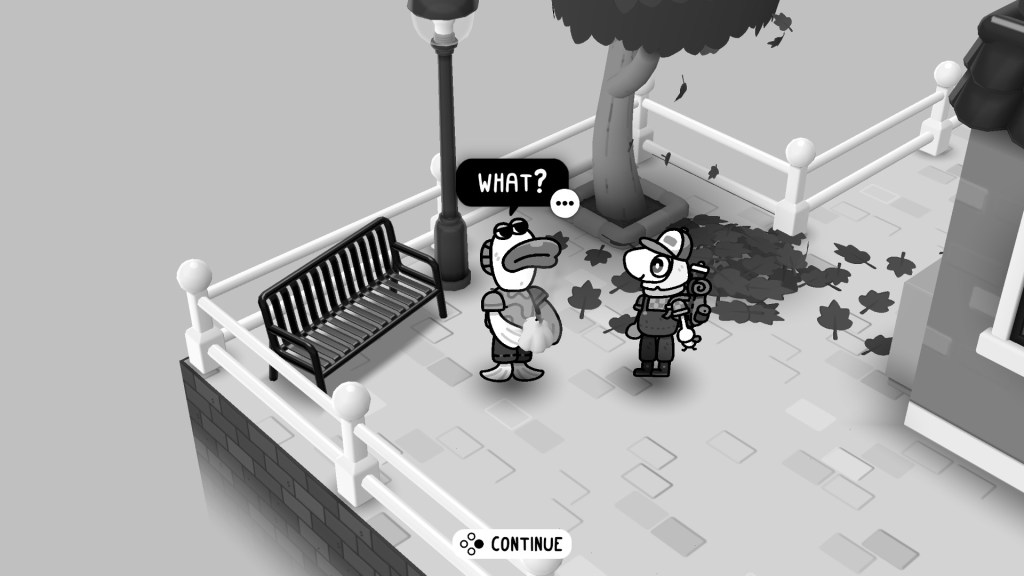
TOEM 2. I admit, at the announcement of this game and the early-shared-footage of the character jumping in an art style that I now realize was not fully rendered yet, I was a bit scared of what I’d think of this game. The first game is a coveted and foundational experience for not only myself but from what I’ve discovered many other too. By the time of release, the art style was fully realized to the same degree as the first game and even adds some fun cinematic portions to provide extra life and some sequeled polish.
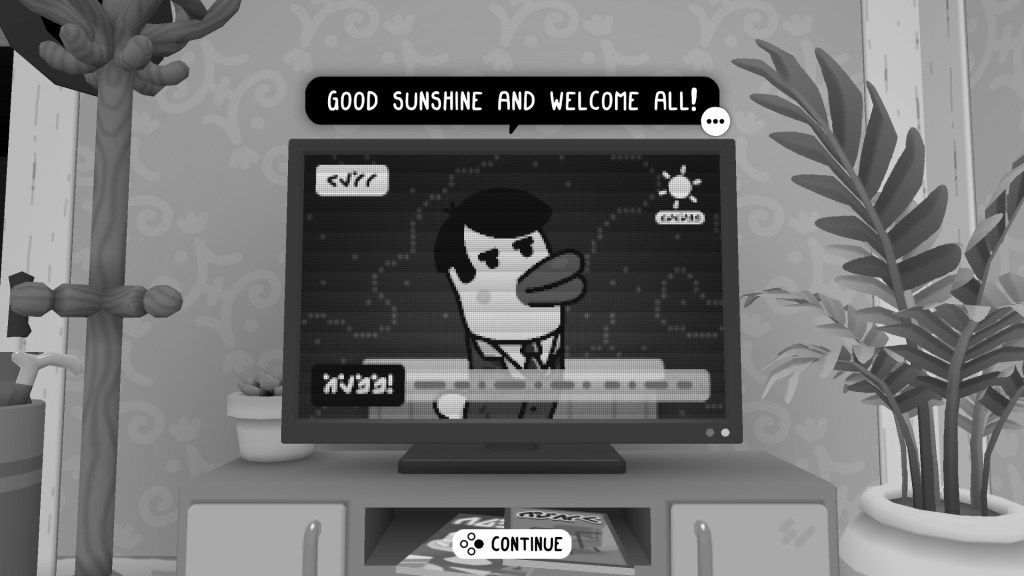
What’s been beautiful to see in both my newly-entered Discord community and online social spaces, is that this game franchise feels universally beloved. It’s clear that the first game was special to so many people and that many were looking forward to this title too. I can thank Sey again, as his invitation gave me the final push to click purchase. A connected play is certainly more motivating. I want to take a moment to be thankful for the fact that there was a time I felt alone in my passion for indies like TOEM, and for the past two years it has been a pleasure to connect with the videogame-playing community online and be able to share that passion through connection. Makes me smile. 🙂
I was amazed early on at how familiar the game felt. TOEM 2 presented a language that I forgot I understood, and I worked my way through it breezily. When I played this game I felt my heart smiling. TOEM has been and continues to be one of more formative indies I played in 2021 – the year I really started to begin to think of games the way I do now. Since then, I feel like I’ve listened to Launchable Socks music at the very least monthly, if not weekly, and they’ve become my favorite band to listen to when I need calm and to remember that things are going to be okay.
The charm of the writing and scenarios continues to come through and reminds me that the TOEM games are made by who have to be beautiful people. People that love and respect nature, but also people that love and respect other people/characters. An early chuckle came from when you’re prompted to click on an air vent, and then it (the person inside) begins to talk to you and is characterized so by flapping off it’s hinges. The sound design of the jibberish was spot on too, illustrating the voice of a person that is either inside of or talking through the vent.
I’d have to go back and play the first TOEM to really answer this question, but I can’t remember if the first game felt this snappy (pun intended?) to take pictures. The quick button press to look through your camera lense from your lamb’s perspective, the up and down of the analog stick to zoom, and the focus feature to lock into an animal or object to center it in your frame to ensure you get the best possible shot. All great. TOEM 2, by my memory, felt a bit more fluid in the use of the camera but again, I’d have to play the first again to really test that theory. Another feature I don’t think I put to use enough in the first TOEM was the ability to zoom in and out while exploring the isometric dioramas. TOEM 2 has 5 levels of zoom and I found zooming out particularly helpful when looking for specific characters in suits in every area of town.
I had also forgotten my approach to playing a TOEM game, but I noted in my brain that I have a much sharper knowledge of videogame language now than I did in 2021 so my navigation of the game may have been quicker in that way. But I couldn’t remember if I liked completing one task for one person/character at a time, or talking to everyone and allowing myself to get a little beautifully distracted. I landed on the ‘talk to everyone and gather all tasks’ method… or maybe a hybrid of both. I think ultimately what happened was that I allowed and trusted my brain to flow through the game’s presented experience. I’d load up on quests, forget about them, then get surprised when I discover where they are in the area and then remember what I needed to do.
I think some of the beauty of TOEM puzzles come from gathering a prompt/question that you know little about or haven’t discovered in the area yet, and each task then gives you a new lens (pun intended) to look at the world through. I’d never think to look for 3 birds playing chess until a photo challenge told me to. The games are really good at teaching you to have a variety of perspectives – to really look at things that have been there the whole time. I really felt that with the ‘giant chicken’ photo challenge. If you’ve played, you know what I’m talking about. I scoured the map looking for the right thing and it was under my nose, or rather, in front of my camera lens, the whole time. And there are an appropriate amount of tasks in each area that make sure you do not leave without at least taking a look around each diorama.
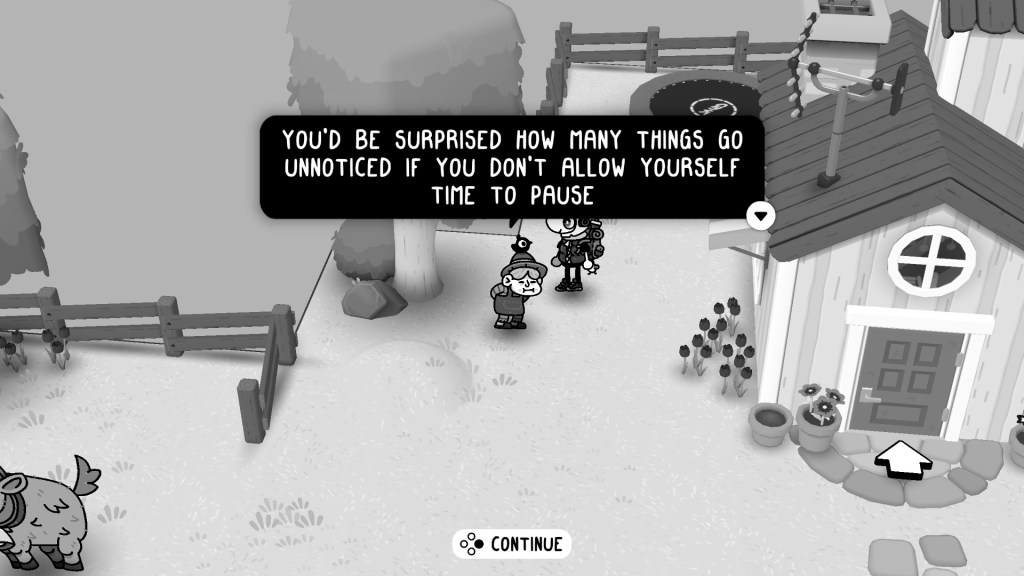
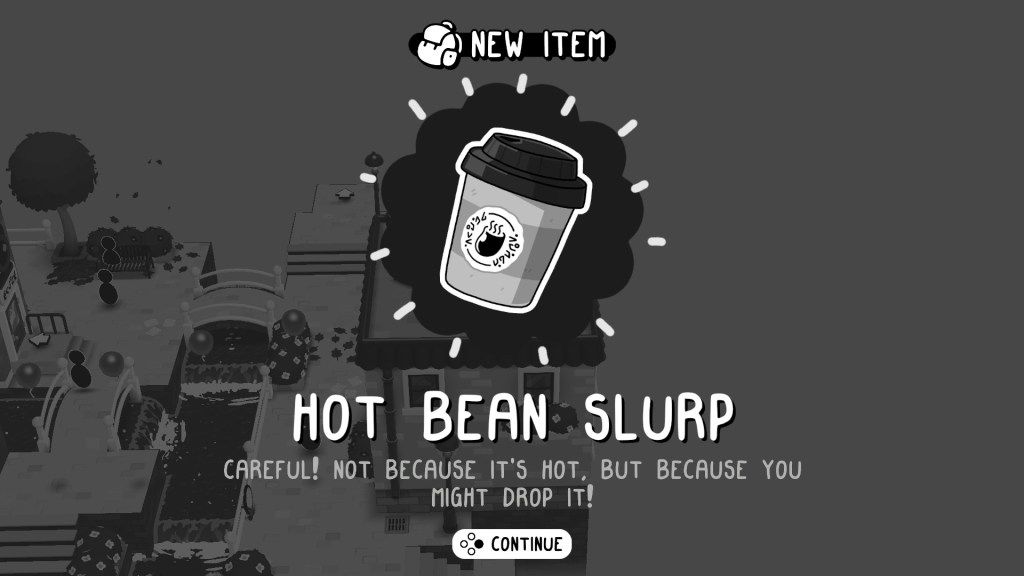
The illustration style of characters and graphic design of the game continues to be so good in TOEM 2. The game’s look is iconic and stylized, and I don’t think we have seen anything like it. The design choices all around create an iconography that we don’t see in other games. Everything from the font, the menu, the character illustrations and the item illustrations… it’s all unified by black, white and grey, and a look that had been fleshed out from the release of the first game. In TOEM 2, there are even fun easter eggs from other indies you can find within. Happy to report that there weren’t changes to the art style that disrupted a flow into the sequel, or I didn’t find any part of the art style that felt like it didn’t belong.
There was a specific happening in game that communicated to me the developers are sensitive to small joys in life. What I’m about to write reminds me of the mindfulness example we often hear about eating a strawberry (or insert fruit of choice). How we should zoom into the various red colors it holds, the concaves of the seeds and the slight shadows they provide, the journey each bite takes our taste buds, etc… There’s a cinematic that plays when you discover how to make jam in the game. The goop that comes out of the machine and fills up the jar to a satisfyingly perfect height and the accompanying sounds are one factor – reminded me of the pouring of tea in Wanderstop and I wonder if that game had influence?… But it was the twist and lock of the jar lid on top. The sound effects were perfect, and created the feeling of taking a peanut butter lid, spinning it one time and having it travel all the way down the spiral in order to lock into place. Moments that may be a simple, passing cinematic for some but I’m willing to bet most players I’ve engaged with felt how good that happening was to experience.
There are a lot more things I have noted that I really loved and enjoyed during my time with TOEM 2, but I think they all benefit from discovering them yourself. If you haven’t played a TOEM game, I highly encourage maybe starting with the first game and then pop into this one. TOEM 2 took me 5 1/2 hours to finish and I completed 86% of the game. I love games that don’t mind giving you a great, under-10-hour experience and then kindly respecting your time to do other things/play other games.
Blood Dungeon
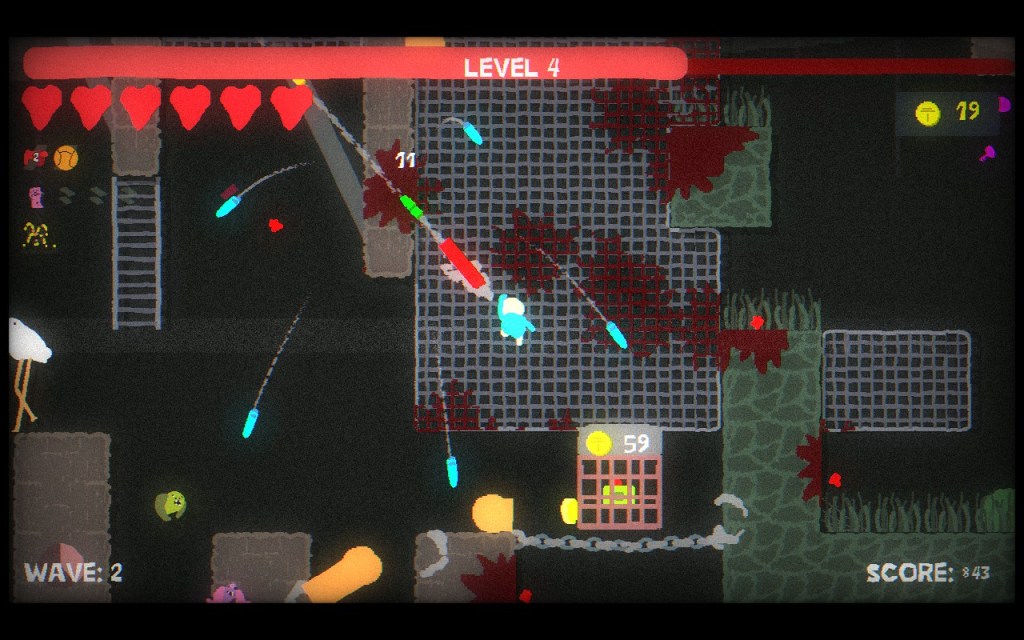
I’ve continued to play Blood Dungeon, and am discovering that it’s a great ‘second-screen’ game. I’ve recently adopted this terminology. It’s fairly new in my brain. But I’ve realized that’s how I’ve been behaving when I play this game and frankly, I think it needs the accompaniment. The 2D platforming-meets-auto-shooting gameplay is automatic enough for your brain to want one more thing. I’ve been pairing it with The Great British Baking Show with my wife and/or as our baby boy plays independently. But I have a hypothetical here…
I want to express this as not to be a knock on Blood Dungeon, which I think is a great game as is, but maybe as a criticism/idea that would keep me more engaged with it if this factor existed. If Blood Dungeon offered some sort of reason to play other than survival, this game would climb up my GOTY list. The mixing of 2D platformer with a survivors-like was certainly more than enough for the devs, but if either they or someone else (letting this game be the foundation) could incorporate things to collect, places to go, characters to interact with, narrative / rogue-lite components. Boy. I would be hooked from start to finish. Again, Blood Dungeon is an excellent game and still resides on my GOTY list, but I still feel like it could use an additional layer to keep me playing runs besides, “you lasted this long, obtained this score, and maybe you unlocked something new… go again?”
I digress… let’s talk about my actual time playing.
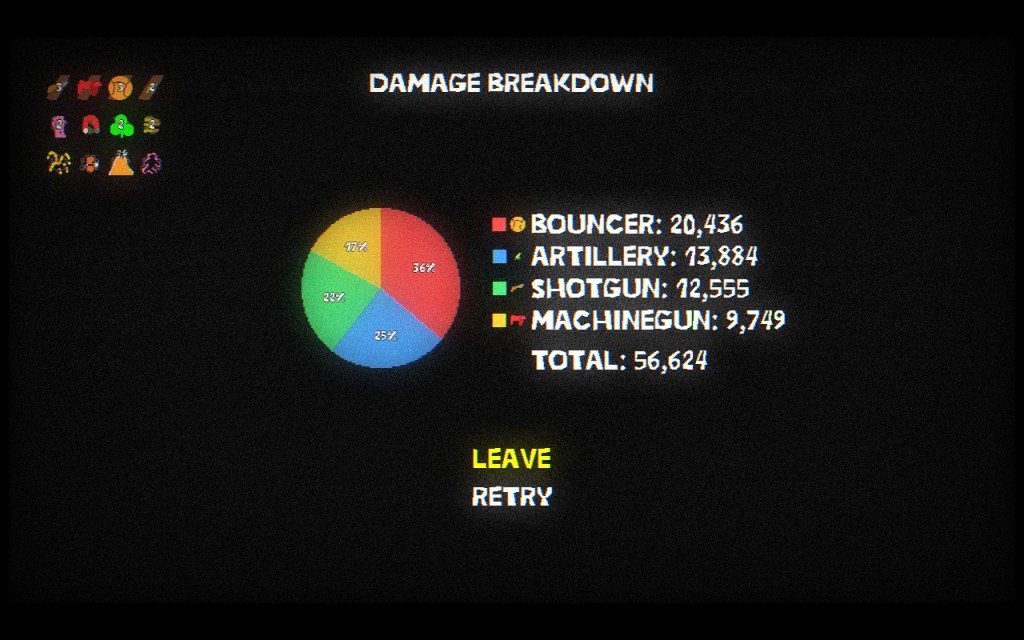
The scaling continues to impress me. The game does a good job at showing me at about 15-hours-in that I deserve to feel a bit more powerful at the beginning of a run. But it also doesn’t get boring. I rarely feel like I’m waiting for it to ramp up. The waves that follow the first feel like a scaled challenge that meets the power of what I’ve already unlocked in the game. In doing so, each run feels fairly manufactured to last about the same amount of time, give or take some good/bad upgrade choices and my twitchy platforming performance that day.
Also, life outside of gaming has been a lot lately. I’ve been informed by my school district that if our local levies do not pass this year, my Art teaching program will be cut. The track record of the community’s votes say that levies will more than likely fail. Personally, I’d be surprised if they didn’t fail. It’s been a difficult thing to navigate with colleagues, resulting in a great deal of emotions and uncertainty at work. That, mixed with still having to do my job teaching Art in an elementary school can make for an overstimulated brain. I thank Blood Dungeon for being some good ‘turn-my-brain-off’ fun, and also a stimulating enough experience to sort of fight fire with fire. It can match my brain’s intensity and provide an open place to put all of those thoughts, feelings, emotions and uncertainty in order to regulate and level myself out. My brain, then and often, can become the ‘second screen.’
Skinja still holds my place for favorite character to use. I like her movement most. It’s fast and chaotic, with a bit higher of a jump than other characters. She sprays a wide shotgun shot as her main weapon. But I’ve found different characters feel better/worse in certain levels. I find the spider character that shoots webs to be most beneficial in the totally vertical level of the pit. Or the kid with the whip to be best for levels that are a bit tigher and will have enemies in closer range. I often choose character and level by mood and feel in an effort to keep novelty/variety alive in my plays so it may not feel too redundant. Again, you are only surviving after all. But it is cool that each character’s traversal actually is and feels different – not just one character movement with different types of auto-shooting.
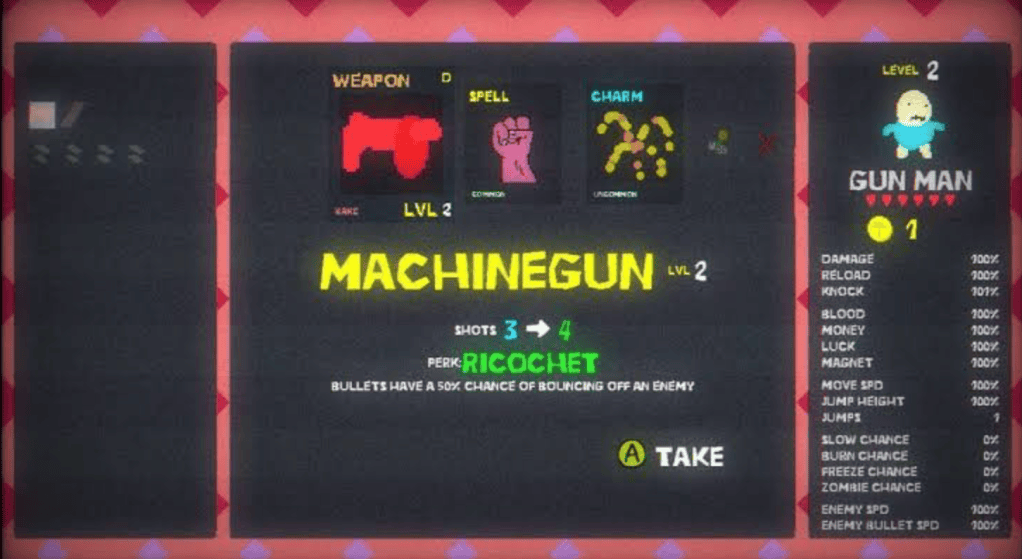
If you happen to play this game or are playing, allow this note from me to read what the upgrade says it is. If you’ve played, you may have already recognized this, but by reading the fine print, I’ve noticed that not every upgrade icon hosts the same upgrade. Some upgrades increase size of the item. Some upgrades increase reload speed of the item. Some upgrades increase the amount of the item. Some upgrades offer a perk to the weapon – for instance, the ability to ricochet off walls. My early plays did not see me reading the upgrades but now I allow for a more zoomed in look to my loadout. Cheers.
Another thing I hadn’t thought of early, but I enjoy the perspective of, is that we can think of the “blood” left over from defeating enemies as coin collection. And I find it beneficial when playing to think of it as so. If the focus can become ‘blood-coin’ collection, then you’re more likely to upgrade faster. But the game knows there’s risk involved in this behavior, and you can feel that more enemies seem to come into the screen in areas more populated by blood. Balance and engagement. Challenge. I really dig it.
A few weapons/perks/upgrades I’ve really come to find useful in recent playthroughs are the Stim Gun, the Turret, and Knockback. Knockback is not something you feel like you need early in the game, especially when the option is presented next to more exciting/flashy upgrades. But the deeper you get into the game, and the more waves of enemies come to take your hearts, you realize that knockback may provide essential spacing you need in order to move around at all.
The turret is good fun and behaves as you’d expect. It places itself in a spot around you, and then proceeds to shoot at the enemies nearest to it. It’s great that it provides an additional point of auto-shooting that can help clear an area and collect more blood efficiently.
The Stim is rad and good for characters like the spider in the webs that benefit from sitting still. It creates a placed area, a circle of red, that sits in one place for a period of time, and as long as you are inside of it, your weapons reload dramatically faster. I haven’t truly had the chance to stack additional upgrades on this weapon/perk/item/whatever-you-want-to-call-it but I hope to soon. Dependent on character, I’m usually pretty quick to choose it.
Enemy variety keeps the game engaging too. Cool things seem to keep happening in order to not make it feel the same each time. I feel like each run feels different in either the amount, power, or variety of enemies presented. It’s cool to spot how their behavior can influence a need to change how you play the game too. For instance, there are caterpillars that trail harmful slime onto ledges to prevent you for landing on them at the risk of losing a heart. Or there are floating skulls that shoot purple bullets your way – another thing to dodge. Again, the game scales up challenge with your understanding of how to play it all while keeping sessions around 5-10 minutes (?) long.
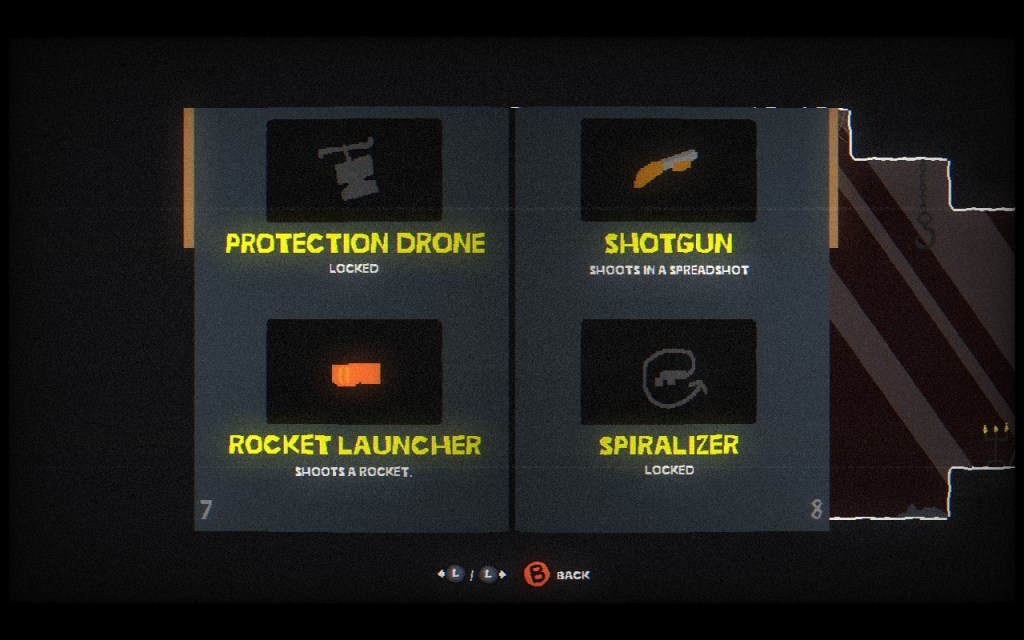
Things in-game like online leaderboards with massive survival scores listed, the menu screen communicating to me that I’m 38% through the game, and the library book of upgrades showing plenty of things I’ve yet to unlock can motivate me to keep playing further. I just need to make sure I have either a ton on my mind or a second screen available to allow for the behavior of repetitive survival runs to keep happening. It’s fun to write about a game and have it make me excited to play more of it. So I may just get to that.
Cheers everybody, and thank you for taking the time to read this. I hope the blog is of value to you in some way. 🙂
— Your Friend Dillon


Leave a Reply