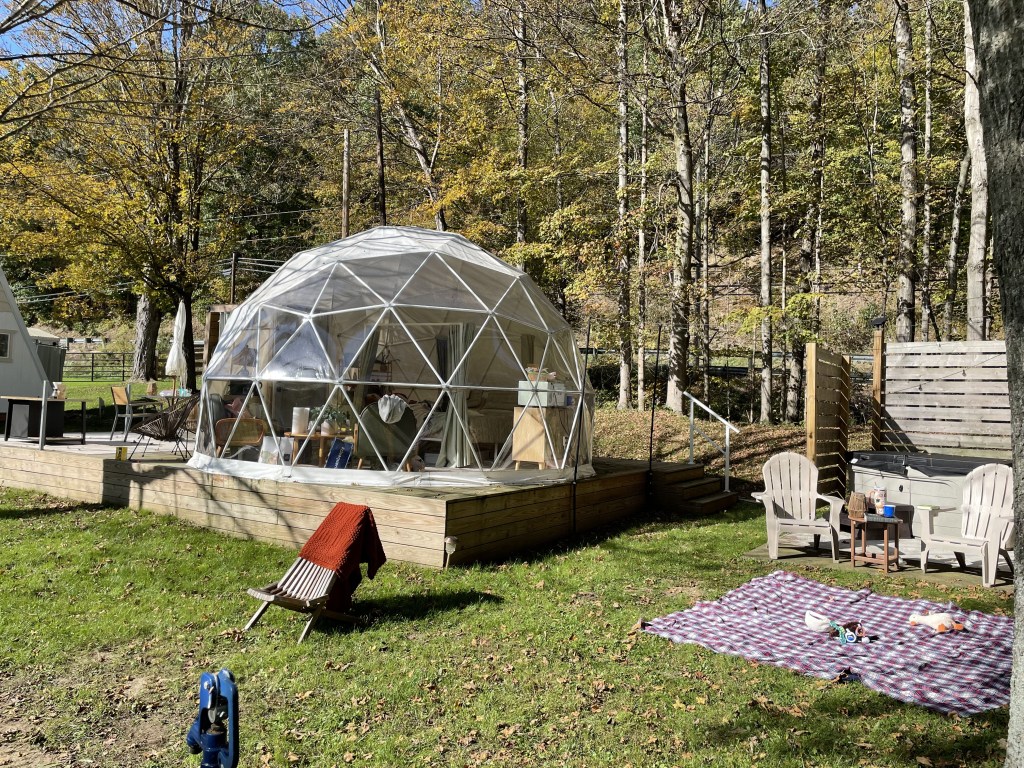
In Autumn of 2024, my wife and I started a tradition in which we go glamping every NEOEA weekend. I won’t bore you with what that acronym means, but it’s basically an extra Friday off for educators. We began using that time to rent small A-frame cabins or geo-domes. They’re small, hold electricity, but their size encourages you to spend more of your time outside than in. We use the weekend to connect with nature, enjoy a fire on a colder Fall morning, and to rest and reflect.
I write about this time’s significance here as it marks an anniversary for the Your Friend Who Likes Games practice. Two-ish years. The story is a tad rocky, but the foundation of this current practice of playing and reflecting upon game experiences on a weekly basis is something I think about quite often. The Fall is a really important time for games in my brain, and it’s a time that really began my thinking of and engagement with games in the way that I do now. I’ve mentioned snippets of this story before, but being outside with time and space in the relevant location has it all very fresh on the brain, so I’m gonna give it a go. Here’s the story of Your Friend Who Likes Games.
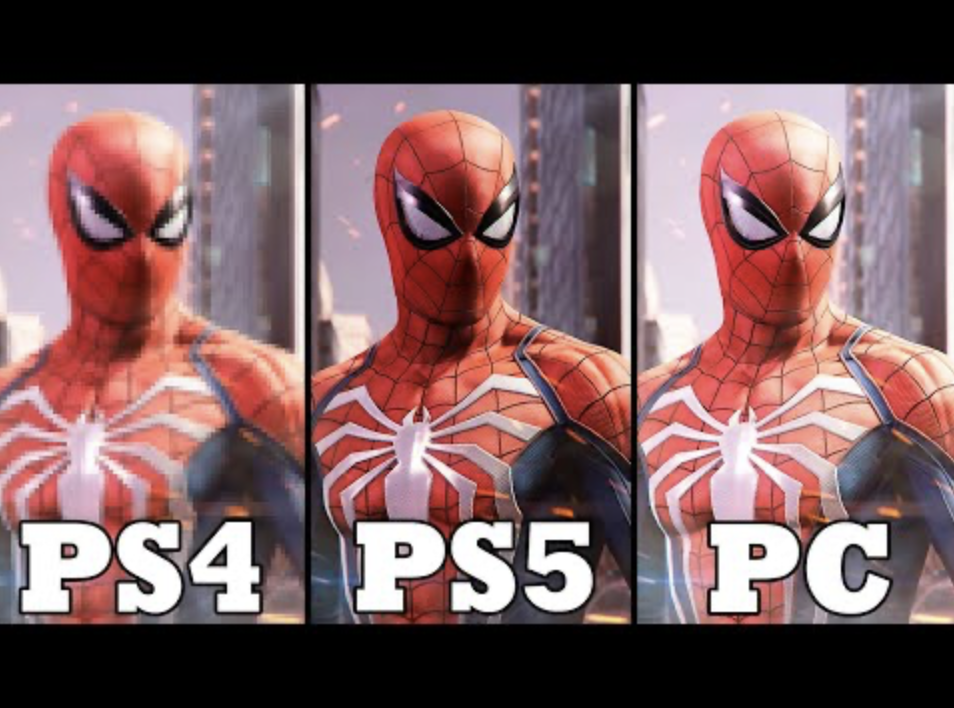
In late 2020, the PlayStation 5 was slated to release and I was ready to charge my credit card to get the latest and greatest in videogame entertainment. My Instagram feed had been full of comparison shots from Insomniac’s Spider-Man showing how much better the PS5 played the game in comparison to the PS4. The PS4 and the Nintendo Switch (1) were the two latest consoles I had at the time, and those videos were very good at hooking me into thinking that I wasn’t good enough of a gamer. In order to be good enough, I’d have to get my hands on a PS5. So when the time came to place my order, I was aware of the social warnings to make sure you had Walmart and Best Buy open on multiple tabs, credit card information at the ready, and to be ready to click purchase at midnight. I didn’t quite believe it would get that crazy, but at 12:01 I quickly realized how wrong I was.
‘What do you mean I can’t just have the thing I want?’ I repeatedly thought in my brain. I admittedly, at the time, was still in a place in which I would just purchase whatever I wanted and needed. It took an intervention from my wife and later therapy to realize I had purchase addiction along with other addictions in my life I needed to address – we’ll get to alcohol later. But I felt like garbage. I felt like my gaming experiences would now not be good enough.
I spent months angry. It took the better part of 2021 to realize that the PS5 wasn’t happening for me. Let’s remember that we were slowly crawling out of the pandemic, and the rapid desire to own a PS5 was certainly fueled by that. They were out of stock for a very long time. I’d check PlayStation.com, Walmart, Target, and Best Buy monthly. At the time, I didn’t have the same tools of acceptance that I do now, (thank you therapy), but I want to point at other things that were happening at the time. I can look at this happening now and very clearly see that as one door shut, another one was opening.
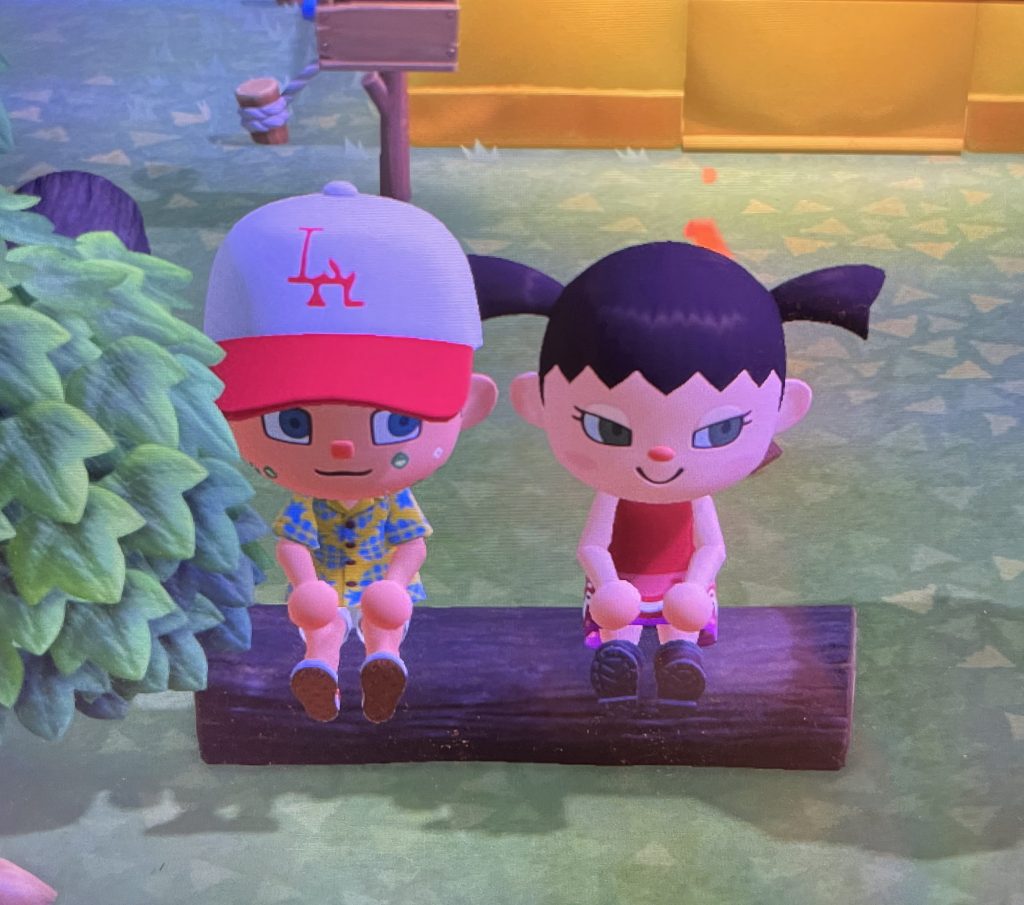
Before the year 2020, I didn’t even know that videogame podcasts were a thing. Videogames have always been a special part of my life in one way or another (I was born in 1991), but I didn’t know that there were people that talked about them intelligently on a weekly basis. During the pandemic, I think it was very easy for folks to zoom into or revisit their videogame hobby in a more serious way. My wife and I spent the majority of our pandemic days logging a collective 900 hours into our Animal Crossing: New Horizons island. And during that time I discovered that I really enjoyed listening to videogame podcasts while I rode my bike. The two I first discovered were The Besties and The Nintendo Powercast.
While folks at The Besties certainly bragged about how amazing the PS5 was, I realize now that they were just doing their jobs. They get paid to sell the latest and greatest in audio form. I envied them then, but they also did something beneficial for me in the mean time while I remained PS5-less – they educated me that there are indie games that exist, ones that are really great, and some of them are available to play on Nintendo Switch. Through their education and my individual exploration, I found myself playing, enjoying, and really connecting to titles like Hades, Celeste, Kentucky Route Zero, TOEM, Death’s Door, A Short Hike, and the beautiful flood gate opened. I began to stop focusing on what I didn’t have, and began finding opportunity in what I did.
I realized later, and within a similar cycle of the Switch 2 release, that I had fallen victim to toxic consumerism. The lesson I had learned during the PS5 release almost, if not mostly, helped through the Switch 2 release and my inability to obtain one early – but not without some pressure and frustration. It’s difficult not to want the new and shiny thing. As a person that likes to engage with new and exciting games, I strongly desire access to them. But, regardless of the latest gaming devices, I’m continuing to learn that there are plenty of games to play if you permit yourself to play anything you’re interested in regardless of release date. It’s become a mantra of the Your Friend Who Likes Games practice that, if you’ve read these posts and heard my podcasts, I’ve thanked Into the Aether for more than a few times (and will again later in this post).
In Fall of 2021, two very special games changed my life. They are still all-time favorites, and I credit them for being a foundation for not only this practice, but a life outlook that is healthier for myself and those close to me. Those two games are Eastward and Stardew Valley.
Let’s start with Eastward. I think about this game monthly, if not weekly. The amazing songs of the soundtrack by Joel Corelitz are found in many of my regular playlists, and the beautiful world and aesthetic presented lives rent-free in my brain. I continue to think that I want to replay the 20-30 hour game, but every time I jump in I have that ‘nostalgia isn’t the same today’ experience. I think I’ve strongly desired to put this experience into writing first. I need to attempt to put to words how special this game was for me. I would like to commit to a full playthrough again, and I’ve tried a couple times since 2021, but I can already tell as I write that this story needs to come first.
With The Besties getting me hip to what indie games were and what games were available to me, I too became in tune with Nintendo’s Indie World showcase. During an August 2021 showcase, a release-date trailer for Eastward had dropped. I had no knowledge of the game at all when I first took in the bee-boops of Corelitz’s “Iron Carbine” and the pixel art world of Eastward was presented to me. I get goosebumps thinking about it, and can see the beautiful reds, oranges, yellows and greens. My heart swelled, and through the aesthetic alone I knew the game was for me. I also remember feeling encouraged at that point to continue to engage in new games, as it then became my fight against the flashy push and pressure to seek out a PS5.
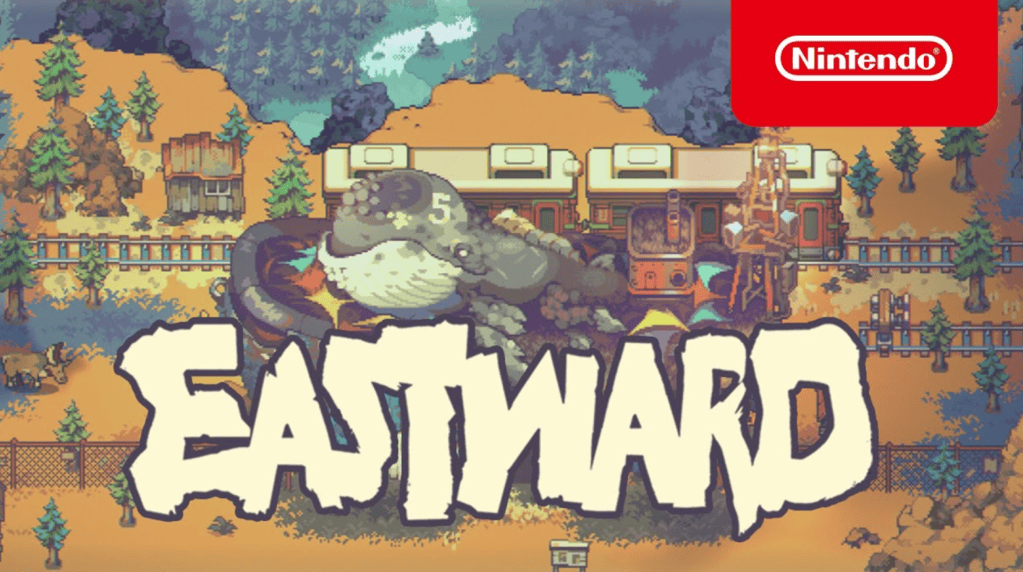
Sadly, words can’t describe how special the world of Eastward is to me, but I can certainly try. First off, the pixel art and environments present a world that has been very lived in. Every screen is full of detail that brings life to each moment. I’m always impressed when devs commit to this level of detail as a lot of that work can be passive in the player’s experience. But I always find too that, if developers are willing, it’s worth the commitment to those who may stop and really look. It drops you right into the story and you, the player, get the opportunity to interpret what it all means. From what we can understand, you play as both a silent protagonist named John – a miner who plays the role of father figure to a girl with superpowers named Sam. Sam has an unwavering optimism, even having joined a world at a young age that has seen better days, and a dark miasma on the way that looks to wipe out what’s left of it. As you play through the story, you can see that Sam’s existence has bigger implications on the health of the world than just a little girl being born into it. John’s protective nature through it all is charming and endearing.
Eastward was one of the first indie games I felt that I discovered on my own and was completely for me. The aesthetic, the structure, the music, the story, it all strongly clicked with me and while it sounds like proclamation of ownership, it’s more a sense of pride in self-discovery for me. I found a place in my gaming journey where I knew from a trailor that I would enjoy a game, I went for it and fell in love with it. And to this day, 5 years later, I’ll strongly state that those particular happenings are a rarity.
Stardew Valley was next. And so random how I got into it, but this game too, really changed my life. I had a day in which I needed to be home to have a new furnace installed in our recently purchased house. On a whim, I downloaded Stardew Valley for $15 on Switch. I’d heard it was good had grown in indie popularity, and felt it was time to give it a try. I played through most of Spring year 1 that day. I couldn’t put it down. The music, sights, sounds, and structure swept me into it and I remember thinking how surprised I was that I was so hooked. It felt like a game that had done it’s homework – celebrated games of the past but had a new level of quality to show. You all don’t need me to ramble on about how great a game Stardew Valley is, you already know that. So I’ll get to how it changed me.
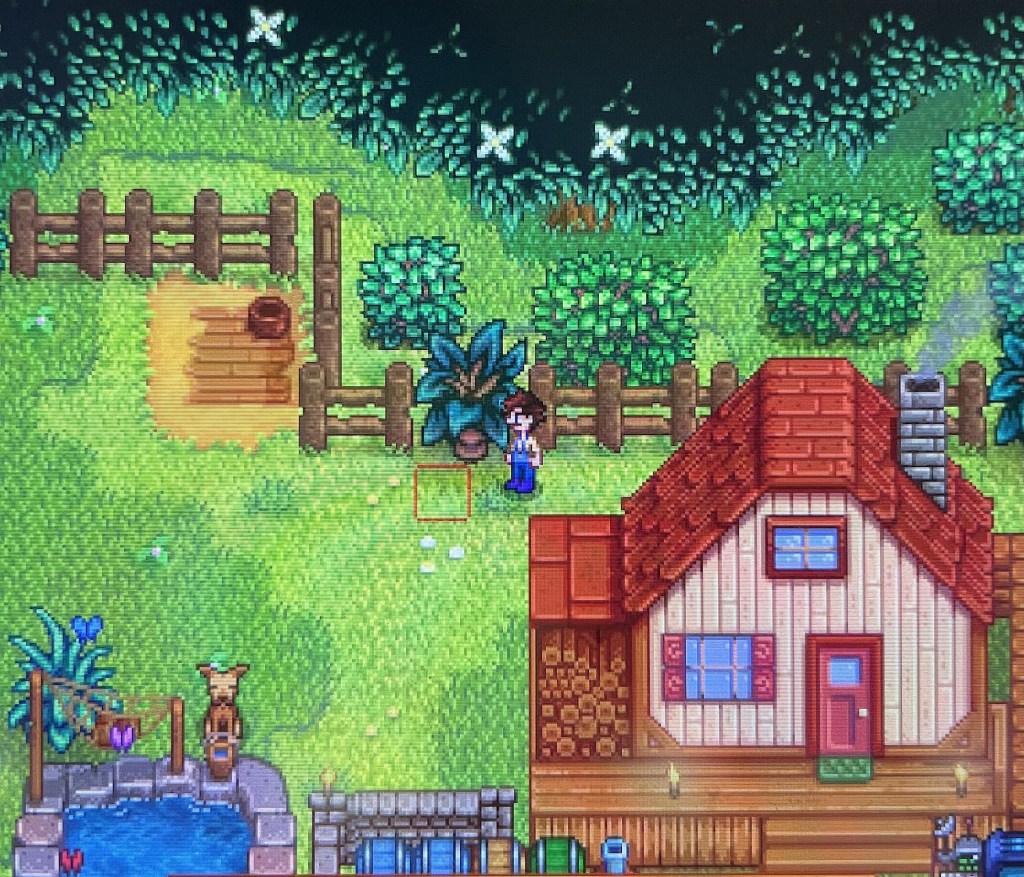
Discovering that the massive game was created by the mind of one person was completely inspiring to me. So much so that I decided to illustrate and self-publish 2 children’s books and a coloring book. I thanked Concerned Ape in my first book titled Furry Francis. Stardew Valley showed me that it’s okay to chase joy. That it’s okay to want to be a good person. The roots of that very feeling lead to a decision I am continually thankful for today. In September of 2023, I decided to stop drinking alcohol.
For 3 years now I have lived a straight edge lifestyle. No drugs, no alcohol, no tobacco. I chose, too, to pursue therapy and continue today to work on my mental health. Choosing this lifestyle was a very easy choice to make. In fact, it was one that I feel like I’d wanted to make for 20 years. I’m finally living the way I want to live and becoming the person I truly want to be. Though, the consequence of that choice had been tough. I had been so used to numbing my feelings, that I now needed to learn how to feel them. All feelings became intense. But I wanted to continue to chase the good feelings. Video games since the pandemic had become a strong and dependable joy I could chase, and with my 3 years of listening to and discovering various video game podcasts, I wanted then to become a part of the conversation.
Years (ish?) prior I had ran into an old friend at a mutual friend’s wedding. We had been in bands together, but never had a mutually exclusive friendship – our friendship was found in collaborative settings with others. Him and I talked at length about various videogames we had been playing, and I was surprised at how many mutual playthroughs we shared. I never thought I would find another person in my life (I know plenty of them exist in the world) that had also played games like Death Stranding and Detroit: Become Human. Our conversation was lengthy and natural.
A year-ish (2023) later, I reached out to him and stated that I was interested in starting a videogame podcast. I expressed my value for the conversation we had at the wedding and thought we may be able to host something good. He agreed, was down to Skype and have some conversations and see where it would go. I was very excited about it, I know now maybe a bit too excited.
I decided to call the show Your Friends Who Like Games. We recorded a couple episodes and I decided to launch. I reached out every week and half about recording. I sent him every indie game I discovered. I texted him every other day. I opened a flood gate in my brain and blasted him with it. I overwhelmed him. I didn’t anticipate getting so excited, but I think I latched onto the podcast idea as a post-drinking rebirth and therefore a new addiction. I used him to justify it.
I want to say here that he was very gracious and loving in his departure from the project. We maybe made 10-ish episodes together? But ultimately, he communicated that he just wanted to enjoy games, and that being critical of them and putting pressure on his plays to later have recorded conversations was too much.
I felt like a fool, I was very apologetic. Again, he was very loving to say that it wasn’t necessarily me but it was clear that our energies and intentions did not match. I cried. It felt like the death of my rebirth after I quit drinking. I deleted the podcast, I put it back up, I deleted it again. I didn’t know what to do. At that point, I had recorded a couple solo episodes when he wasn’t able to make the recording times that I put into place (note the pushiness I had), so I knew solo wasn’t impossible. I reached out to early listeners and said it was over, real dramatic for an amateur hobbyist podcast, BUT… I really loved it.
That love, or maybe a need, to engage with and talk about videogames became the driving force to push forward. I had to allow myself the freedom to be a videogame sicko and to be obsessed. I needed to let the project then become what I wanted it to be. My friend who left was also very encouraging of that too. He even gifted me his old PC knowing I would put it to good use (to this day, I pray it wasn’t a guilt gift).
So I did. I re-launched the podcast with a new name – Your Friend Who Likes Games. Because I knew the intention was the same. I wanted to be a part of the conversation. I wanted to permit myself to be obsessed with videogame culture. I wanted to play all that I was able to play and then talk about it. Navigating a show on my own was interesting. There are many ways a videogame podcast can be presented and I struggled for a while to figure out what was the right way for me. Do I record a show after I finish a game? What if the game takes too long? Do I record every week no matter what? But when I talk about a game in a recording it feels like its over and I need to find something else play. For a while, or at least what stayed most consistent, was a hybrid of weekly/when I finish a game. What put a lot of pressure on me, was that weekly seemed to stay put and I kept trying to cram games into that structure like it was my job. I then found myself gravitating toward shorter, under 10 hour games I could finish in a week because they were easier to talk about… and I did that for a better part of a year… until…
Yes, here it is, the part where I thank Into the Aether again. I discovered their podcast in late 2025 and realized that those two fully permit themselves to play what they want to play regardless of release date. They still play the new and exciting stuff of course, but will “follow their whims” and play “what games call to them” when they want. They play games each week and talk about them on their show each week. It’s as simple and “low-key” as that – their words. That format keeps the practice of making content consistent in one’s life and values time they did spent with games. It doesn’t dwell too much on time they didn’t spend with games. I liked this approach a lot better and will openly admit I adopted it for my own show in 2026 (who cares, I’m amateur at best so far). Then, in February of 2026, another big factor changed my life…
My son was born 🙂
I held on for a couple months, but realized the two worlds of trying to produce a self-made podcast and taking care of a baby boy were clashing and there was no way I was going to let a hobbyist practice get in the way of being a good father. So I ended the podcast, and trasitioned into a blog. This format fits into my life much better as I can work on it quietly and in pieces – doesn’t have to be all in one recorded go. The format? Not sure I can completely define that, other than play games each week and write about them. But this post and others show that some are more serious, some can me more about games instead of playing them, some have play-blog energy, I kindof don’t want to box it in… I simply want to play videogames each week and write about them each week. We’ll let the format sway and flow from those roots.
The title of Your Friend Who Likes Games has a duality for me. It communicates a sort of lonliness, the unfortunate fact that it can feel lonely to be the only person you know in your own life that plays 40-60 video games a year. The title sort of communicates to the people I already know, because when I started, that was the only audience and community I could see. The other part of the title is a yearning to make “friends who like games.” The goal has been to document and share my own valued gaming experiences in hopes of connecting with others who have similar or other powerful gaming experiences.
And I’m very happy to say, over the past two years, I have done that.
I made an early connection with Chris of Honest Indies and we shared a chat about the videogame Fishbowl earlier this year (that episode is still on Spotify and YouTube). I’ve met online, stayed in touch with and had a podcast conversation with an early podcast influence of mine, Jenny Windom of Geeks and Grounds and Wholesome Games (also on Spotify and YouTube). I’ve enjoyed keeping in touch with and chatting about games with CozybyJoshy and DJ Stormageddon. I’ve talked about the process and thoughts behind content creation with Jared of Play Along podcast. I’ve recently connected with Kay Grennon of Heart Event podcast, and Gianni of The Content Mill podcast. I’ve had thoughtful conversations about certain indies with Kate and Emily of No Small Games. I was invited by Sey of Good Game Lobby to be a part of his monthly game club Discord. I’m finding my people. I’m finding community. And I’m continually wanting to express gratitude for that. I feel less alone in my videogame passion and all of these folks above really help me with that. I’m connecting with friends who like games.
Thank you all for giving my work a chance, and for giving it your time. 🙂
Your friend Dillon


Leave a Reply