‘Still playing…’
Strange, a phrase that unfortunately still has some shame wrapped around it. The idea that I am still playing a games I already wrote about. An insecurity I can’t shake. And I know I’ve talked about this insecurity before, so forgive me. I can’t help but look at my practice here in comparison to other podcasts/blogs/outlets in the context of releases. Writing in video game culture is often wrapped around the new and exciting thing. And over the past few years, the new and exciting thing is weekly. In fact, more than weekly. There’s multiple new experiences to talk about each week. The intake or recognition of new games talked about each week can make me feel like my place in this space is less-than.. and that’s a big bummer. The feeling surfaces from time to time and maybe writing about it can solidify movement through it. I hope to continue to develop security in my own practice for what it is. I know I’m not the only one with self-doubt in a creative practice like this.
I can ask myself what there is to be ashamed of? The goal of this blog each week is to write about video games I have been playing. But maybe I want to allow myself to write more about what I’m thinking too? Big ideas around video game culture and relationship to playing games? If you’ve read the blog for a few, you may see that I sprinkle that in anyway… but, ALSO, if you’ve read, this blog can have a little bit of an identity crisis each month.
I think it’s a clash between video game content I engage with in moments I can’t play video games – I have more of those moments than I do moments to play video games. So an envy can come into play when I hear folks that play and talk about video games for a living. Now I know that sounds nice, but I’m sure there’s a ton of pressure and a different relationship to the hobby when it becomes work. But it feels really good to indirectly connect. To play the games being talked about and feel like I’m participating within the culture. But when I’m not able to afford the time, money, or energy to do that, I need to find ways to self-validate and place value upon the experiences I do get to have – and I’ll do so with the games below.
Simply put, I don’t know what the elevator pitch/social media bio of this blog is. I’ve been asked to guest on Play Along Podcast in a couple weeks and perhaps that’s why I’m on the thread of what exactly it is I do here. I don’t think I want it to have too much of a box. I’d like it more to be a practice with a name that folks come to each week knowing it’s about video games in some way. As I write this out, I can see that my practice can often weave video games and life – in my mind, the two things go hand in hand. I believe we (those that enjoy games) try to fit video games into our life, and we process our lives using video games. It’s ‘a weekly blog about video games.’ That simple statement creates a big umbrella to operate under.
But I need to continue to own what my life is and what I’m able to do. I may fantasize about playing video games and talking about them for a living but I don’t think that’s a realistic possibility right now. I’ll continue to practice gratitude for what I’m able to play and write about what’s interesting through each week’s sessions.
So in regards to games and life, my life outside of games continues to be a lot. By next week’s blog post, I will know whether or not I need to make a career change if my job ceases to exist. That, mixed with students very excited for the upcoming months of holidays makes for a very tough and overstimulating time in the elementary school setting. More than that, the combination of AI takeover with my Art Education career being undervalued has me in a very low state. It feels like the things I believe in are crumbling to money-hungry assholes and I’m left to delegate energy between how I fight back and keep my own sanity. I thank stories like Wildwood’s success for providing sparks of hope.
All that being said, with the weight of it all, I’ve settled in and enjoyed what I’d call “anchor games” that I’ve leaned and depended on in the weeks of adversity. When change and disruption is frequent in your life, the idea of something new just becomes one more thing that your brain can’t handle. It’s been nice to settle into some experiences knowing exactly what they are, but also that they offer small bits of progression each play session so I know something is accomplished in a positive way. Those games continue to be Persona 3 Portable, Blood Dungeon, and Star Wars: Galactic Racer.
Persona 3 Portable
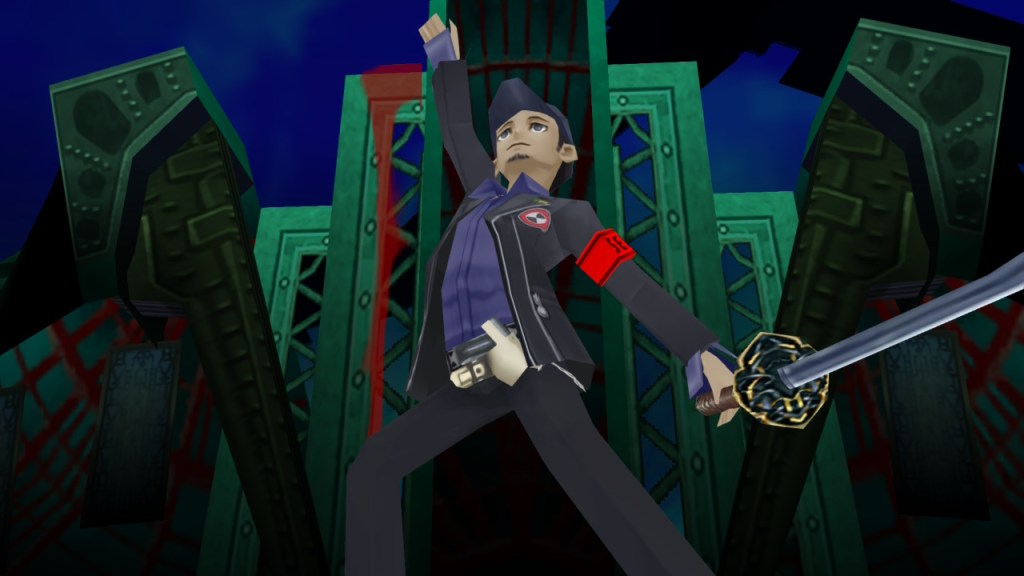
It’s cool to have worked through 30+ hours of Persona 3 Portable and find that after in-game months of routine, big narrative events eventually happen. I say eventually, but I found them appropriately timed. The game does a great job of making you feel like you’re building toward something, and then the big event happens.
I welcomed a small change of structure with the Summer Break too. Smart to begin the game in April to give you time to get settled into the groove of what the game’s asking and then encourage some Tartarus dungeon grinding with minimal daytime activities. Though, the other side of that coin had me hungry for character / narrative interaction. The trade-off being that calendar days can move much faster over the break, making the game’s overall progress feel like it’s still moving at the appropriate pace.
In regards to dependability and how P3P puts my brain at ease, is that it doesn’t ask too much of you and none of your choices feel like you’re at great risk. You make a couple of choices by clicking on what to do each day, and each of those things feels like positive progress toward persona building. At night, I walk around a dungeon with my chosen party and fight shadows – battles challenging enough to be engaging and not too much to be discouraging. I’ve always been allowed to restart a battle if I fall, and enemies can be defeated in fair time with the correctly-selected moves to match enemy type-weakness.
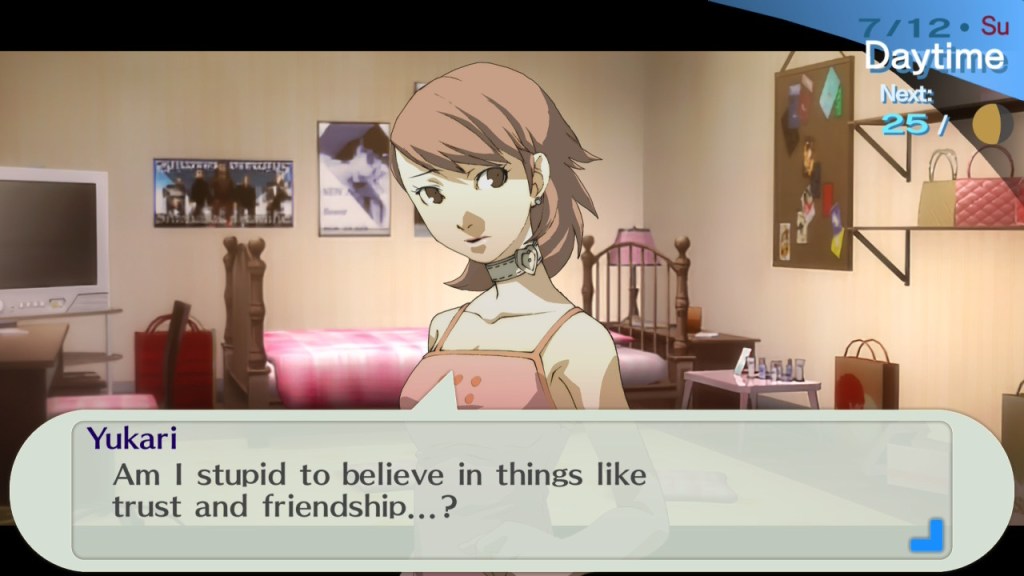
I appreciate that the dungeon changes aesthetics after so many levels – it’s made of up various sections that offer the same lite-maze-like structure but a different paint job to signify tier. The new paint job welcomes new enemy types too. Other games that present this grindy of a battle experience have me bouncing off pretty quick, but I find P3P‘s structure comforting. I find it fun and challenging, but almost never frustrating or punishing. The game almost assures you that you’ll be successful each time.
Party upgrades happen over time too, which I didn’t expect. I never thought your small gang of folks that knew about and execute persona use would grow to be more than a few. I’m a big fan of Aigis. She’s a cyborg gal with a bunch of firepower. Her main “Pierce Attack” will do damage in the 100s while other party members are poking enemies 30 hits at a time. Her “Swift Strike” causes a bunch of damage to all enemies at the cost of 50 of her own HP. But with how quick you can end a battle with the move and then heal up after.. it’s a move worth making.

Feels good to when persona attacks upgrade. Dia becomes Media. Bufu becomes Mabufu. More specifically, ‘heal one party member’ becomes ‘slightly heal all party members,’ or ‘do freeze damage to one opponent’ becomes ‘do lite freeze damage to all opponents.’ Evolutions of attacks that can take out more enemies at once and make battles more efficient definitely feels good.
Portable is the word in the title. Very fitting for this game. I appreciate the ability to progress in very small snippets and put the Switch 2 to sleep at any time. I imagine having this game on a PSP with good battery life would be ideal. Very pocketable. But P3P has been a favorite on the good. A great companion to a ‘wait-for-your-oil-change-to-be-done-at-the-dealership’ evening.
The other side of Persona 3 Portable being simple and me knowing exactly what I’m getting into is that Persona 3 Portable offers a lot of repetition in that way. I’ve often second-screened it with whatever my wife and I are watching in the living room. Either that, or I fight the burnout of it by permitting breaks and playing other games. Games like Blood Dungeon.
Blood Dungeon
Blood Dungeon is a game I continue to enjoy and peck at. It’s my favorite ‘holy crap what an over-stimulating day, let me play this super over-stimulating game to fight fire with fire…’ game. And it works. It’s similar to folks (also me) that can find fast metal music to be ambient. Or like how the only sense of calm a racer can find is when they’re pushing 200mph (more on that later). It works. Blood Dungeon feels like it can give my over-stimulated brain a place to put it all. The various flashing auto-attacks mixed with hordes of enemies and 2D platforming provide a match to a day filled with difficult conversations with coworkers and managing nearly 300 elementary students a day.
I remember writing previously about desiring a reason to go somewhere in the 2D platforming context of the game. I’d reverse that now and say the precision and reason to travel comes in timing. When you play the game enough – I’ve now logged 16 hours and it tells me I have 40% progress – you begin to recognize patterns of a run, and it becomes easier to zoom in on what each second of your run means. This game asks you to beautifully balance offense, defense, and collecting to make the most of your time in order to complete the best run you can. If no one is near, go find them, eliminate them, and collect their blood. When enemy hoards grow in size, watch your spacing and make sure you’re collecting as much blood and coins as possible. All while balancing your upgrade choices to create a build that feels like it is helping you survive.
Webs continue to be a favorite weapon choice, even among some newer unlocks. I love their use. They slow enemies and peck at them with damage while they’re caught inside, all while also providing you with an extra surface to climb on. If you keep upgrading them, they nearly fill your screen. I’ve found it useful in all the levels. I feel that enemies are designed to force you onto another platform where another enemy may be and cause you damage, but when the whole screen is a platform you can grip onto, evasion becomes much more successful.
“Tombs” has been an interesting level to take on. A majority of it is made of blocks that can be pecked at with damage to be destroyed and you then have more space to move – as if you’re slowly digging into the level. In the mean time, the bit of platforming you’re initially allowed is through small gaps or ‘tunnels.’ It creates unique scenarios in which you fight enemies. And eventually, when you break all the walls down, the space becomes very open and empty – a time in which webs are very useful to give you places to climb up and land upon.
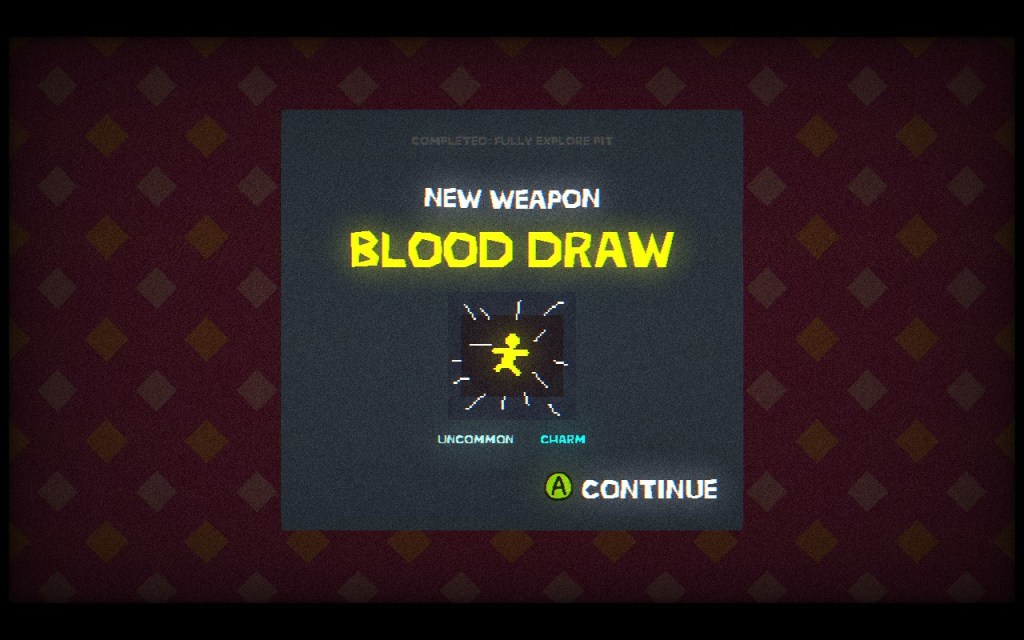
I continue to unlock features/weapons that can be either super useful or at the very least interesting. The ‘blood suck’ function rocks – every 30 seconds (or faster if upgraded?) your character sucks up all the blood you’ve earned by elimination that happens to be laying around the map. Great for upgrading faster. There’s a similar upgrade for coins. I recently unlocked a character who has a starting weapon of a harpoon. The harpoon auto-shoots to a surrounding enemy but then sticks wherever it lands. You then have to platform to retrieve it before you can use it again. Not the most useful right away, but a weapon that can redefine the way you play to keep things fresh and interesting.
The last thing I’ll write about Blood Dungeon this blog is that I didn’t realize that you can “beat” levels. There seem to be two bosses per level and if you defeat both of them, the run ends and you win. You gain a little crown above the level and while it’s nice to have a variety of places to go, it’s also nice to be told ‘you’ve seen the extent of this one’ and put my effort into others.
I’m curious of the longevity I’ll find in Blood Dungeon. I’m curious where it’ll land for me in the year-end GOTY conversation. 🙂
Star Wars: Galactic Racer
I can anchor into Galactic Racer knowing that I absolutely love the racing experience this game provides. The longevity of the campaign and my motivation to play beyond it is still to be seen, but it feels like I am near the middle? I’ve made it into the league at this point, and have welcomed more of a challenge by upping the difficulty. But I’ve loved dipping into an experience that feels like I’m holding on tight like the intro of Solo: A Star Wars Story.
I tiered up one difficulty from the recommended for higher stakes. I find myself getting slammed by other racers more often, I find my vehicle more sensitive to breaks/disruptions, and I’m not guaranteed the top 3 each race anymore. And with the higher difficulty allowing less crashes, it feels more like the survival approach that the game looks to present. I desire to role play as Shade, a person that just entered this league and want to earn my way through, not just coast through the power fantasy of continually winning. It’s more engaging and gripping this way.
The league offers a fun way to make some extra cash that also makes a lot of sense with the narrative – some pre-race wagers with other racers. You can bet other racers that you’ll beat them and their projected position. Win, and gather extra coin. I enjoy too that it further creates a sense of camaraderie between racers in the league. Their relationship to you and to each other feels like one of both intense competition and an unspoken sort of looking out for each other. You both compete with each other but are also competing against the danger of the sport itself. Everyone involved knows how crazy you have to be to rip a speeder hundreds of miles an hour through a tight cave, and therefore a respect is understood. Well, for everyone except Kestar Bool. He’s a spoiled jerk.
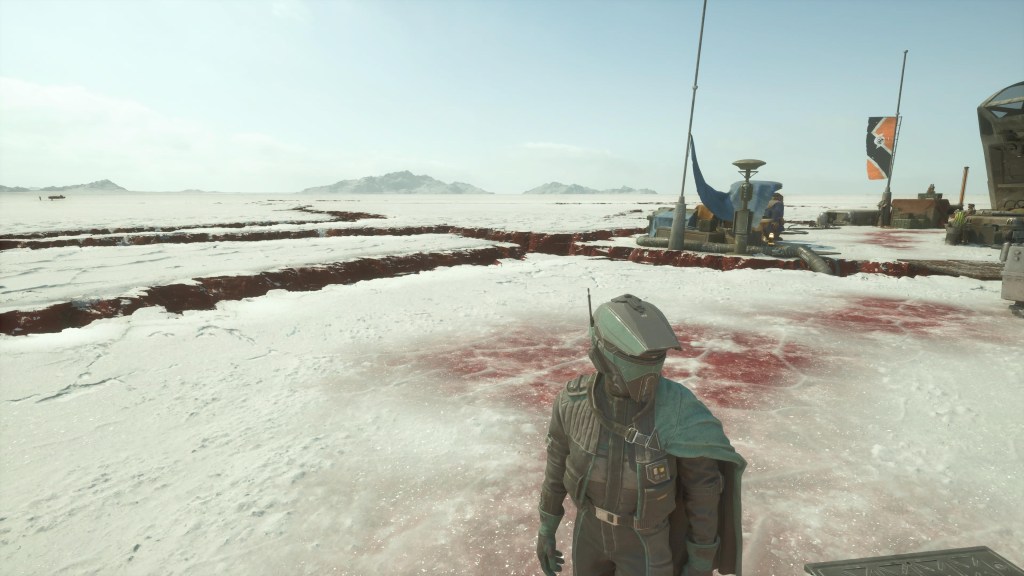
Speaking of tight caves, the planet of Crait was a pleasant surprise through my entry of the new league. I’d forgotten that I had previously seen the red salt trailing behind speeders in trailers. Revisiting the planet had my brain connecting to the sequel trilogy – curious if the hub’s location is where the battles we find in Star Wars: The Last Jedi take place. But the woven paths found in caves on Crait are cause for some exhilarating racing. You go so fast in a tight location that you’re not sure if the next 300 feet in front of you is a wall or an opening. I’d found out the hard way a couple races. Not only that, but the weaving of paths can create a sort of ‘figure 8’ effect where at any moment through the caves, another racer can blast through bumping at your side and to knock your course off slightly enough to then turn your speeder into a pile of flames. It’s fun, it’s thrilling, and it’s one of many ways this game just absolutely rules. The environments are really great, and all feel like they have clever ways that they work racing into them. All with that super authentic Star Wars feel.
I won’t spoil how, but you get a chance to try podracing within the campaign and I can safely say that I’ve never felt speed like that before in a video game. The way they can work with scale to present the illusion of you ripping through space is really amazing and feels revolutionary.
I’ve found another perk card that goes well with my before-mentioned-in-a-previous-blog-post Redliner build, and this is Speed-based Cooling. With my Redliner build looking to use the ramjet often (boost meter), the speed-based cooling invites you to risk a continual use of your ramjet at high speed to get your meter to cool down so you may keep using it. The game does a great job of making a majority of the available racing perks skill-based – ones in which if you can handle the risk, you may reap rewards. It’s easy to feel out of control or at the edge of crashing while using the ramjet, but with speed-based cooling equipped, I’m motivated to keep the meter alive by going faster and faster.
I’m still loving the game and curious how long my relationship with it will last. I’ve got my two besties curious about it, and it may become another weekly game night game for us if they themselves naturally get into it. I keep mentioning how awesome it is. For now we’re trying PEAK as it released on consoles. Perhaps more on those climbing experiences another time.
I suppose my advice to myself and to others in this space of video game culture is to play the games you’re interested in and able to play. Find ways to self-validate and create value in those experiences. And what I can continue to do a better job at is celebrating others even if they have a bit more gaming time than me 😉
Until next time, and thank you for reading.
Your Friend Dillon


Leave a Reply